
When you’re considering scuba diving destinations, you look for locations that meet your trip objectives, are fun, and offer diverse underwater experiences. You choose based on marine life, your diving style, and whether the site has favorable weather conditions when you’re traveling.
Understanding how factors such as currents, dive site accessibility, and local and migratory fish species affect a specific area helps you plan dive trips that meet your goals. Here are several of the destinations you should consider for your next dive trip, each offering a different type of underwater experience.
Where can you dive Australia's Great Barrier Reef?
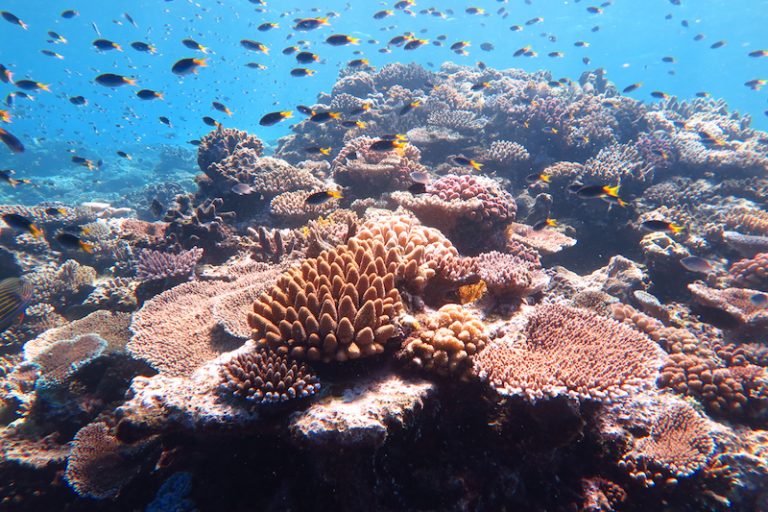
Stretching 1,400-miles (2,253 km), the Great Barrier Reef is the largest coral reef system in the world with around 3,000 individual reefs and 900 islands. Base yourself on Australia’s northeast Queensland coast for access to hundreds of dive sites along the reef.
In some locations, shallow reefs exist alongside deeper sections, which allows for a range of diving experiences and abilities. Marine biodiversity includes 1,500 species of fish, 4,000 types of mollusks, and 1,000 species of echinoderms, along with countless other marine organisms.
Because the reef is so extensive, there are many different areas to explore during a trip. Liveaboards run many different itineraries to these areas:
- Cairns and Port Douglas (Outer Reefs): both spots offer day-boat access to popular sites like Milln Reef, Flynn Reef, Hastings Reef, and Thetford Reef, where you'll find coral bommies, clownfish, and reef sharks at depths suited to divers of every level. Most liveaboards leave from Cairns.
- The Ribbon Reefs: this remote chain of 10 outer reefs near Lizard Island is best known for the Cod Hole, where you can get close to large, tame potato cod in clear water.
- The Coral Sea: features steep drop-offs and pelagic action at remote atolls like Osprey Reef, plus the SS Yongala wreck off Townsville, one of the world's top wreck dives and home to bull rays, sea snakes, and schooling barracuda.
- Southern Great Barrier Reef: offers more than 20 sites around Heron Island and Lady Elliot Island, two coral cays known for manta ray cleaning stations and seasonal turtle nesting.
You're certain to encounter marine life such as turtles, dolphins, potato cod, and sharks. Expect colorful, species-rich coral reefs and seasonal migrations of larger pelagic fish. Water temperatures are generally warm. Dive excursions of different lengths are offered regularly throughout the year. Conditions at your specific location will vary depending on the area and season.
Marine life highlights
- Turtles, dolphins, and potato cod
- Reef and pelagic sharks, including seasonal migratory species
- 1,500+ fish species, 4,000 mollusk species, and 1,000 echinoderm species
- Vibrant, biodiverse coral across 2,900+ reefs
Why is Bonaire ideal for shore diving?

If you're a shore diver looking to travel, Bonaire gives you access to over 50 officially recognized sites along its west coast. Many of these dive sites are shallow with an easy shore entry, so they're accessible even if you're less experienced. Most resorts offer unlimited shore diving all year, with roughly 86 to 97 total moored sites across the island.
- Klein Bonaire: this uninhabited island is just a 15-minute boat ride from the major resorts, giving you even more sites to explore beyond the mainland.
- Bonaire's sloping reefs: most of the mainland's reefs, like the Forest and Sharon’s Serenity, slope gently, so you'll find them approachable at any experience level.
- Karpata: a steep vertical wall, a contrast to Bonaire's typical sloping reefs, and a good pick if you want more depth and drama.
- Salt Pier: the pillars here create shifting light patterns that often draw larger fish, plus schools of smaller reef species sheltering underneath.
While exploring Bonaire's vibrant reefs you may encounter tropical fish, squid, seahorses, octopus, and tarpon. Another dive site highlight is the Hilma Hooker, a 236-foot (72 m) Dutch cargo freighter that sank on its side in 1984 in 130 feet (40 m) of water.
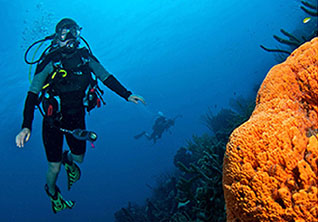
The calm waters within the Bonaire National Marine Park are protected. Visibility runs 65 to 100 feet, making the area well-suited for underwater photography. Bonaire's water and surface temperature stay fairly consistent year-round, and since the island lies outside the hurricane belt, you can plan your trip for any month.
Marine life highlights
- Colorful tropical fish, seahorses, octopus, and squid
- Tarpon and barrel sponges
- Marine life around the Hilma Hooker wreck
- Vibrant reefs within the protected Bonaire National Marine Park
Where can you dive in Fiji?

Fiji is often called the soft coral capital of the world. Nutrient-rich currents running between its more than 300 islands feed dense, colorful coral growth on both fringing and barrier reefs.
The islands of Viti Levu and Vanua Levu offer different diving environments. There are calm, shallow reefs, stronger-current drifts, and shark dives. Water temperatures stay warm year-round. Visibility on many outer reefs regularly tops 100 feet (30 m).
- Shark Reef Marine Reserve (Viti Levu): known for pelagics, particularly sharks, and an ideal site if you're an experienced diver. You may see bull sharks, blacktip reef sharks, and tawny nurse sharks. Tiger sharks and whale sharks are typically seasonal.
- Great Sea Reef (Vanua Levu): off the northern shore of Vanua Levu and also known as Cakaulevu Reef, this 120-mile (193 km) stretch ranks as the world's third largest barrier reef system, with extensive soft coral formations, the highest percentage of Fiji's hard coral and reef fish species, and larger reef fish such as humphead parrotfish, dolphins, and turtles.
- Taveuni Island: excellent dive experiences and diverse marine life, with soft, colorful coral, abundant fish species, and drift diving in the Somosomo Strait, including the famous dive sites of Rainbow Reef and the Great White Wall.
Marine life highlights
- Bull sharks, blacktip reef sharks, and tawny nurse sharks (with seasonal tiger and whale sharks)
- Extensive soft coral formations
- Humphead parrotfish, dolphins, and turtles
- Colorful drift-diving reefs at Rainbow Reef and the Great White Wall
Where can you dive shipwrecks and sharks in Micronesia?

Micronesia spans thousands of islands across the western Pacific. Each destination here offers a distinct kind of diving: strong currents and pelagics in Palau, historic wrecks in the calm, clear waters of Chuuk (Truk) Lagoon, and gentle drift dives alongside manta rays in Yap. Water temperatures stay warm year-round. While many of the best sites are best reached by liveaboard, land-based diving is also available at each destination.
- Palau: a well-known shark sanctuary with challenging drift dives at sites such as Blue Corner, where strong currents carry nutrient-rich water along the reef channel, concentrating smaller fish and drawing in larger marine animals. In higher-current zones, experienced divers use a reef hook to hold position and watch passing sharks without excessive movement.
- Yap: manta rays year-round, along with a large variety of fish species, including reef sharks, turtles, and eagle rays.
- Chuuk (Truk) Lagoon: over 60 WWII wrecks, making it one of the greatest wreck dive destinations in the world.
Marine life highlights
- Grey reef sharks at Blue Corner (Palau)
- Manta rays year-round at Yap
- Reef sharks, turtles, and eagle rays
- Marine growth on 60 WWII wrecks at Chuuk Lagoon
Schedule your next dive trip today
Planning a dive trip takes the expertise of a specialist who's familiar with dive destinations around the world. Every Maduro Dive travel specialist is both an experienced travel agent and a certified diver, so they can build you an itinerary with the right resorts, liveaboards, and airfare for your trip.
Partner with experts who can streamline everything from choosing your destination to handling the logistics, saving you money, and eliminating stress. Contact us to start planning your next dive trip.
Recent Posts
- Best Scuba Diving Destinations For Your Next Dive Trip
- How To Combine Dive Trips And Local Culture
- Top 5 Tips For Planning Your Next Dive Vacation
- The Benefits of Liveaboard Dive Trips and Why You Should Try One
- 3 Unique Dive Destinations For Your Next Dive Vacation
- Unforgettable Experiences at Exotic Dive Resorts Around the World
- Unique Dive Trips Focused on Underwater Archaeology
- Choose the Right Type of Dive Trip for Your Skill Level
- Liveaboard Diving for Beginners: What to Know Before You Book
- Exploring Family-Friendly Dive Trips
Categories
- Australia
- Bahamas
- Bay Islands
- Belize
- Blue Hole
- Bonaire Diving
- Borneo
- Cayman Brac
- Cayman Islands
- Cozumel
- Curacao
- Cuttlefish
- Dive Destinations
- Dive Equipment
- Dive Liveaboards
- Dive Resorts / Properties
- Dive Travel
- Dive Travel Deals
- Diver Wellness
- Dolphins
- Dominica
- Eagle Rays
- eagle rays
- Family Travel
- Fiji
- Galapagos Islands
- Great White Shark cage diving
- Guanaja
- Honduras
- Indonesia
- Infographics
- Isla Mujeres
- Learning to Dive
- Little Cayman
- Maduro Dive Newsletter
- Malaysia
- Maldives
- Manta Rays
- Marine Life
- Mexico
- Micronesia
- Muck Diving
- Myamar
- Palau
- Papua New Guinea
- Pelagics
- Philippines
- Pinnacles
- Polynesia
- Reefs
- Riviera Maya
- Roatan
- Saba
- Sabah
- Scuba Diving
- Scuba Gear Reviews
- Scuba News/Events
- Scuba Training & Education
- Sea Legends
- sea lions
- Sea of Cortez
- Sharks
- Single Travel
- Sipadan
- Socorro Islands
- Solomon Islands
- South Africa
- Specialties
- ST. Kitts
- Stingrays
- Tahiti
- Thailand
- The Bucket List
- Tobago
- Truk Lagoon (Chuuk)
- Turks and Caicos Islands
- Turtles
- Uncategorized
- Underwater Photography
- Underwater Video
- Utila
- Walls
- Whale Sharks
- Whales
- Wreck Diving
- Wrecks
- Yap
Archives
- September 2026
- August 2026
- July 2026
- April 2026
- March 2026
- February 2026
- January 2026
- November 2025
- October 2025
- September 2025
- August 2025
- July 2025
- June 2025
- January 2024
- April 2023
- March 2020
- March 2019
- January 2019
- November 2018
- September 2018
- July 2018
- May 2018
- March 2018
- January 2018
- October 2017
- September 2017
- June 2017
- April 2017
- February 2017
- January 2017
- October 2016
- August 2016
- July 2016
- May 2016
- March 2016
- February 2016
- January 2016
- December 2015
- August 2015
- June 2015
- April 2015
- January 2015
- November 2014
- July 2014
- April 2014
- February 2014
- December 2013
- November 2013
- October 2013
- September 2013
- August 2013
- July 2013
- June 2013
- May 2013
- April 2013
- March 2013
- February 2013
- January 2013
- December 2012
- November 2012
- October 2012
- September 2012
- August 2012
- July 2012
- June 2012
- May 2012
- April 2012