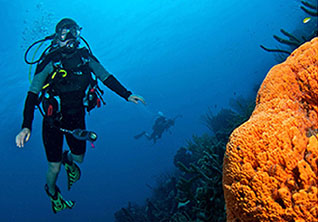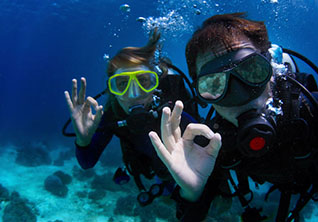

Good underwater photography on dive trips starts with choosing the right location. The subjects you want to shoot, whether whale sharks, wrecks or tiny macro critters, should guide where you go, when you go, and whether you stay at a dive resort or on a liveaboard. Here is what you can expect from some of the best underwater photography destinations.
Where are the best underwater photography locations?
Each region offers different marine environments. The species you can photograph change with the site you pick, the time of year, and pelagic migrations. If you are an advanced diver, strong currents and steep drop-offs can create dramatic photo opportunities. If you’re a newer diver, moored sites, calm coral reefs, and shore diving offer easier shooting conditions. Here is a summary of top photography locations by region.
Caribbean and Mexico

In the Caribbean, you can photograph colorful reefs with tropical fish, reef sharks, eels, turtles and rays. Calm water and good visibility make the region a strong choice whether you are a beginner or an experienced underwater photographer. The Cayman Islands, Bonaire, Saba, and the Bahamas also offer large fish, wrecks, walls, seamounts, and shore and drift diving. Mexico covers both the Caribbean and the eastern Pacific, where you can photograph large pelagic species around Socorro in the Revillagigedo Archipelago.
Central America and the Galapagos

Belize and Honduras offer wall dives, pinnacles, and barrier reef systems, with chances to see larger pelagic species plus plenty of macro life along the reef slopes. Costa Rica offers abundant fish life, and remote Cocos Island adds schooling scalloped hammerhead sharks, manta rays and occasional whale sharks. In the Galapagos Islands, a wide-angle lens lets you capture hammerheads, eagle rays, sea lions, fur seals and, in season, whale sharks.
South Pacific

In the South Pacific, Fiji, Papua New Guinea, and the Solomon Islands offer colorful hard and soft coral gardens, sheer walls, wrecks, and schooling pelagic fish. Fiji's Rainbow Reef and Bligh Water are known for vivid soft corals, and Beqa Lagoon's shark dives put you close to bull sharks. Papua New Guinea's Milne Bay offers excellent muck diving for macro photography, while the Solomon Islands add WWII wrecks around Guadalcanal and reefs in Marovo Lagoon.
Micronesia

In the northern Pacific, Micronesia centers on Palau, Yap, and Chuuk (Truk) Lagoon. In Palau, Blue Corner's currents bring in gray reef sharks, barracuda, and schooling jacks. German Channel is known for manta rays. Yap's Mil Channel is known for year-round manta ray encounters. Chuuk Lagoon holds dozens of World War II shipwrecks, such as the Fujikawa Maru, where coral-covered decks and cargo holds make striking wide-angle subjects.
Southeast Asia
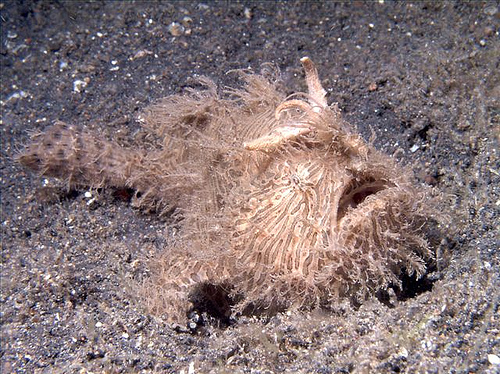
Indonesia, Malaysia, Thailand, and the Philippines are known for their rich variety of corals and fish. You can explore some of the world’s best muck diving along with coral gardens, vertical reef walls, and historic shipwrecks. Currents and visibility vary by site, so you can mix drift dives with calm, macro-focused dives. Soft and hard corals, schooling pelagics, and tiny invertebrates make the region a good fit for both wide-angle and close-up photography.
Marine life highlights
- Caribbean: reef sharks, eels, turtles, rays, and tropical reef fish
- Socorro, Mexico: large pelagic species
- Belize and Honduras: larger pelagic species and macro life on the reef
- Cocos Island, Costa Rica: scalloped hammerhead sharks, manta rays, and occasional whale sharks
- Galapagos Islands: hammerheads, eagle rays, mantas, and seasonal whale sharks
- South Pacific: hard and soft corals, invertebrates, schooling pelagic fish, and several shark species
- Micronesia: sharks and manta rays, plus WWII wrecks in Chuuk Lagoon
- Southeast Asia: muck-diving critters, soft and hard corals, schooling pelagics, and tiny invertebrates
Should you choose a dive resort or a liveaboard for underwater photography?

Liveaboard dive trips typically offer four to five dives a day, and their itineraries typically reach dive sites you can’t get to from a resort. Dive resorts usually offer fewer dives per day but more activities on land.
If you want to photograph larger open-water species, look for liveaboard itineraries that head far offshore. If you prefer reef life and macro subjects, a resort close to the reef may suit you better. Currents, visibility, and time of day all affect your shots. Your guides can help you plan dives around your interests and pace.
What are underwater photography weeks?
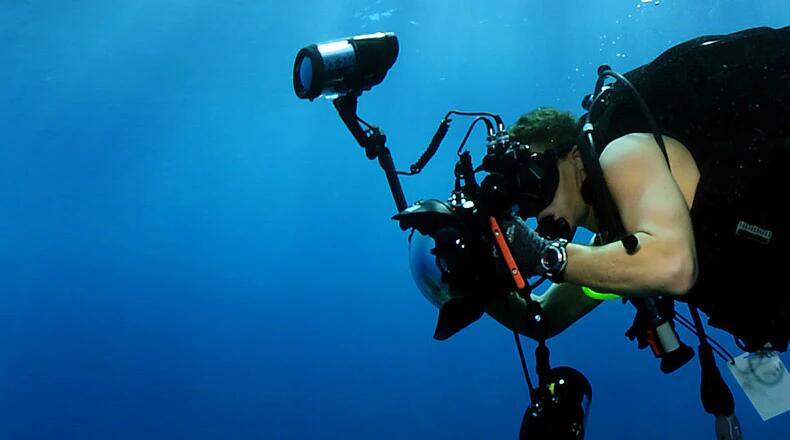
Some resorts and liveaboards run dedicated photography weeks; some are geared to experienced photographers and others to beginners. Instructors share tips on staying stable, working with currents and photographing marine life without disturbing it.
With several dives a day, you get more chances to practice in different settings. Dive professionals plan schedules and choose sites to match your experience level, the marine life you want to shoot and your comfort in the water, whether you prefer calm reefs, drift sites or deeper walls.
Book your resort and liveaboard dive trips today
Good underwater photography starts with planning and the right location. Dive resorts and liveaboards give you access to coral gardens, reef walls, wrecks, and drift sites. Work with a Maduro Dive travel specialist to book your trip and build an itinerary around the photos you want to take.
Recent Posts
- Best Underwater Photography Locations for Dive Trips
- 11 Caribbean Dive Resorts for Unforgettable Experiences
- Best Scuba Diving Destinations For Your Next Dive Trip
- How To Combine Dive Trips And Local Culture
- Top 5 Tips For Planning Your Next Dive Vacation
- The Benefits of Liveaboard Dive Trips and Why You Should Try One
- 3 Unique Dive Destinations For Your Next Dive Vacation
- Unforgettable Experiences at Exotic Dive Resorts Around the World
- Unique Dive Trips Focused on Underwater Archaeology
- Choose the Right Type of Dive Trip for Your Skill Level
Categories
- Australia
- Bahamas
- Bay Islands
- Belize
- Blue Hole
- Bonaire Diving
- Borneo
- Cayman Brac
- Cayman Islands
- Cozumel
- Curacao
- Cuttlefish
- Dive Destinations
- Dive Equipment
- Dive Liveaboards
- Dive Resorts / Properties
- Dive Travel
- Dive Travel Deals
- Diver Wellness
- Dolphins
- Dominica
- Eagle Rays
- eagle rays
- Family Travel
- Fiji
- Galapagos Islands
- Great White Shark cage diving
- Guanaja
- Honduras
- Indonesia
- Infographics
- Isla Mujeres
- Learning to Dive
- Little Cayman
- Maduro Dive Newsletter
- Malaysia
- Maldives
- Manta Rays
- Marine Life
- Mexico
- Micronesia
- Muck Diving
- Myamar
- Palau
- Papua New Guinea
- Pelagics
- Philippines
- Pinnacles
- Polynesia
- Reefs
- Riviera Maya
- Roatan
- Saba
- Sabah
- Scuba Diving
- Scuba Gear Reviews
- Scuba News/Events
- Scuba Training & Education
- Sea Legends
- sea lions
- Sea of Cortez
- Sharks
- Single Travel
- Sipadan
- Socorro Islands
- Solomon Islands
- South Africa
- Specialties
- ST. Kitts
- Stingrays
- Tahiti
- Thailand
- The Bucket List
- Tobago
- Truk Lagoon (Chuuk)
- Turks and Caicos Islands
- Turtles
- Uncategorized
- Underwater Photography
- Underwater Video
- Utila
- Walls
- Whale Sharks
- Whales
- Wreck Diving
- Wrecks
- Yap
Archives
- October 2026
- September 2026
- August 2026
- July 2026
- April 2026
- March 2026
- February 2026
- January 2026
- November 2025
- October 2025
- September 2025
- August 2025
- July 2025
- June 2025
- January 2024
- April 2023
- March 2020
- March 2019
- January 2019
- November 2018
- September 2018
- July 2018
- May 2018
- March 2018
- January 2018
- October 2017
- September 2017
- June 2017
- April 2017
- February 2017
- January 2017
- October 2016
- August 2016
- July 2016
- May 2016
- March 2016
- February 2016
- January 2016
- December 2015
- August 2015
- June 2015
- April 2015
- January 2015
- November 2014
- July 2014
- April 2014
- February 2014
- December 2013
- November 2013
- October 2013
- September 2013
- August 2013
- July 2013
- June 2013
- May 2013
- April 2013
- March 2013
- February 2013
- January 2013
- December 2012
- November 2012
- October 2012
- September 2012
- August 2012
- July 2012
- June 2012
- May 2012
- April 2012